
Searching Rutherford County Criminal Dockets
Open the Rutherford County Online Court Records System. Enter a full first and last name or a case reference, select Criminal, and keep Circuit Court and General Sessions checked unless the correct office is certain. The form also accepts Case Year and Case Number, but each added value narrows the result.
A formatted General Sessions number such as 75GS1-2025-CR-502790 should be copied in full for reference. The portal help directs users to enter the final numeric segment in Case Number. If no match appears, remove a guessed year, try the other criminal court, and contact the clerk.
- Complete the portal Turnstile check and choose Criminal.
- Search a full party name with both likely court offices selected.
- Use only the final numeric segment when searching a formatted case number.
- Record the court office, case number, charge, and last event.
- Ask the correct clerk for the official register or certified document.
Rutherford Criminal Court Routes
Circuit Criminal keeps felony and misdemeanor matters presented to the Grand Jury. General Sessions Criminal hears misdemeanors, traffic matters, preliminary proceedings, and cases that may later move by indictment or bind-over. A case can therefore have events in more than one court route. Circuit Criminal is reached at 615-898-7812; General Sessions Criminal at 615-898-7831.
The official General Sessions page shows the county’s criminal and traffic routing.
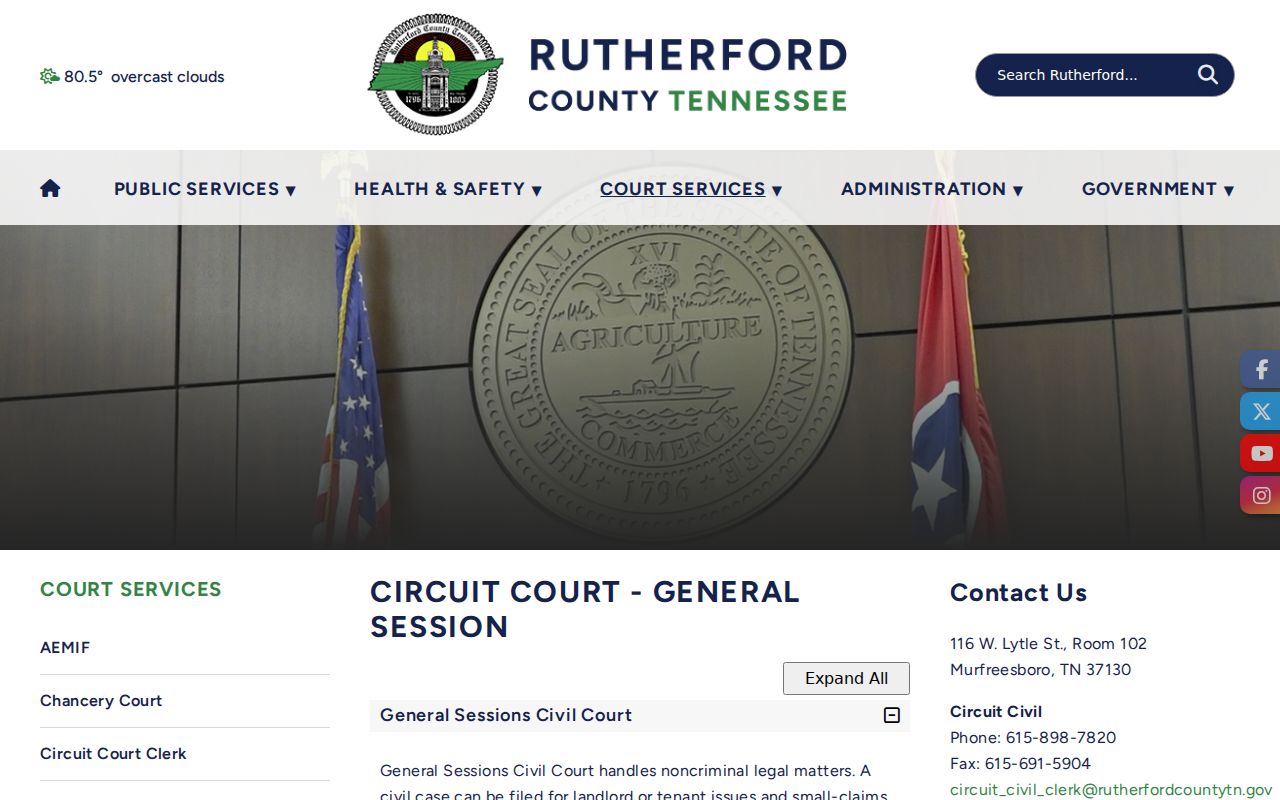
The captured page helps a searcher choose the office before interpreting a Rutherford County criminal docket.
Inside a Rutherford Criminal Docket
The official sample shows the court and date, generation time, case number, officer or affiant, anonymized defendant, counts, charge, classification, attorney notation, and hearing type. It is a calendar-style docket, not the whole register. Pleadings, orders, payment details, and final disposition may require clerk verification.
| Case Number | Local identifier such as 75GS1-2025-CR-502790. |
|---|---|
| Charge | Offense, count, and displayed class such as M / B. |
| Setting | Hearing, Motion Hearing, Capias hearing, Preliminary Hearing, or Probation Violation. |
| People | Officer or affiant, party, attorney, public defender, or pro se notation. |
| Limits | A setting does not by itself show plea, sentence, or final disposition. |
Rutherford Hearing Codes in Context
Off: identifies an officer line, while Aff: identifies an affiant. PD may mark a public defender and Pro Se means a party appears without counsel. The county samples display M / A, M / B, F / C, and other class pairs. Preserve the code as shown because the inspected county pages do not supply a complete glossary.
- Capias hearing
- A setting using the docket’s own label; it is not a final outcome.
- Preliminary hearing
- A General Sessions stage before a matter may advance.
- Probation Violation
- A hearing label, not proof of the court’s ruling.
How a Criminal Case Moves
A local matter can start with a filing or citation in General Sessions, proceed through a preliminary setting, and move to Circuit Criminal after Grand Jury action. Motions, resets, plea settings, trial, disposition, and sentencing create separate entries. Not every case follows every step, and a published daily list may show only the next setting.
Docket flow: Filing › Arraignment › Pretrial › Plea or Trial › Disposition › Sentencing
Rutherford Criminal Counts in Context
The Tennessee Administrative Office of the Courts reported 9,052 criminal counts filed and 8,086 dispositions in the 16th Judicial District reporting for July 2024 through June 2025. Those are counts, not unique defendants or case totals. One docketed case can contain several counts.
The totals give scale to Rutherford County criminal docket work but cannot answer what happened in one case.
The report also separates a range of filing and disposition categories. Those labels belong to the AOC statistics table, not to a conclusion about any named person. A Rutherford County criminal docket must still be read event by event. Compare the charge, count, court office, setting, and entered disposition before describing the record. If a published calendar and the clerk's register differ, the official register and entered order control.
Courts That Hold Criminal Dockets
General Sessions handles county misdemeanors and preliminary criminal work. Circuit Criminal handles matters presented to the Grand Jury. Municipal courts keep their own city-issued citation records, while federal cases use the Middle District of Tennessee. Juvenile matters follow a separate, more restricted route.
The Circuit Criminal office page identifies its scope, judges, forms, and counter rules. Both main county criminal divisions operate through the Judicial Building at 116 West Lytle Street in Murfreesboro.
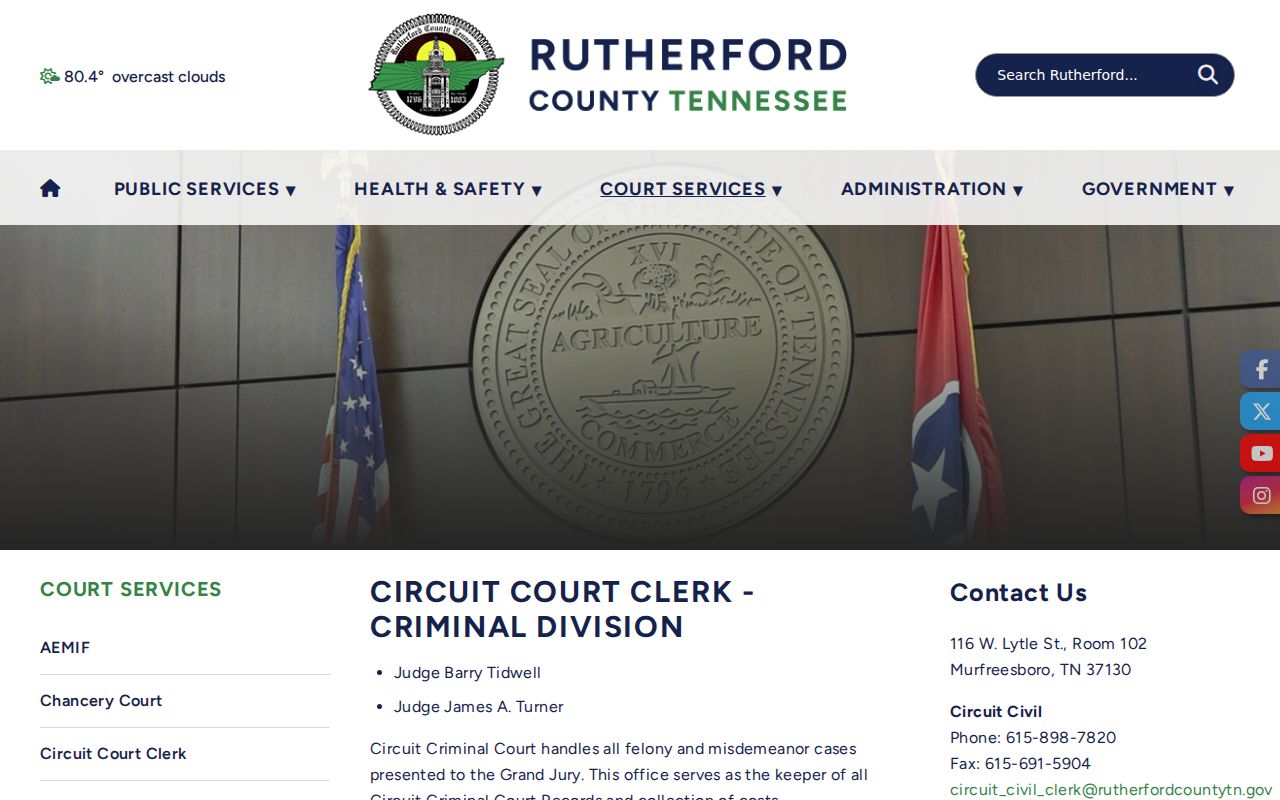
The official capture links the docket search to the office that can supply the underlying criminal record.
Rutherford Criminal Forms and Status
The Circuit forms index includes local rules, e-filing material, expungement resources, and court-specific forms. Form availability does not mean a filed copy is public. The official forms index should be checked for current instructions.
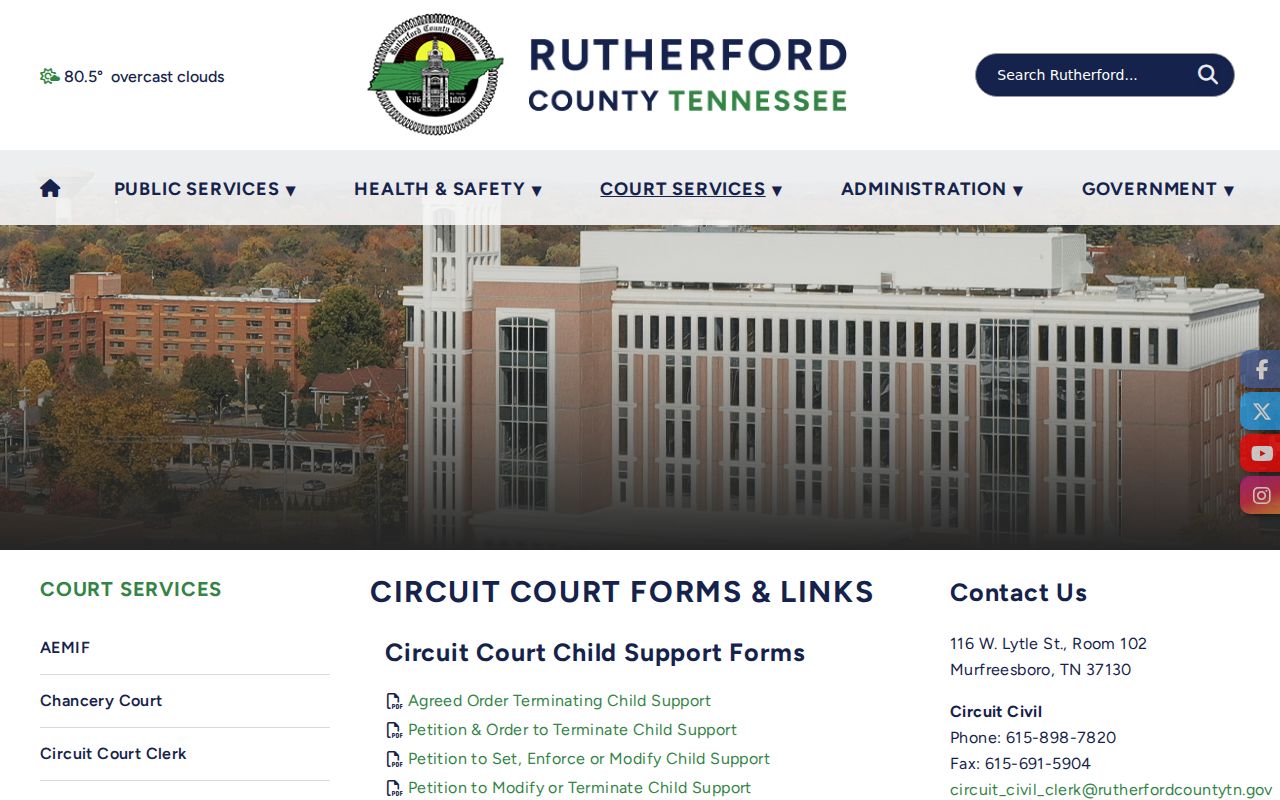
The capture helps separate filing tools from the public docket and official case file.
For next-day trial status, the county directs users to check after 4:30 p.m. The Daily Trial Information page records that procedure.
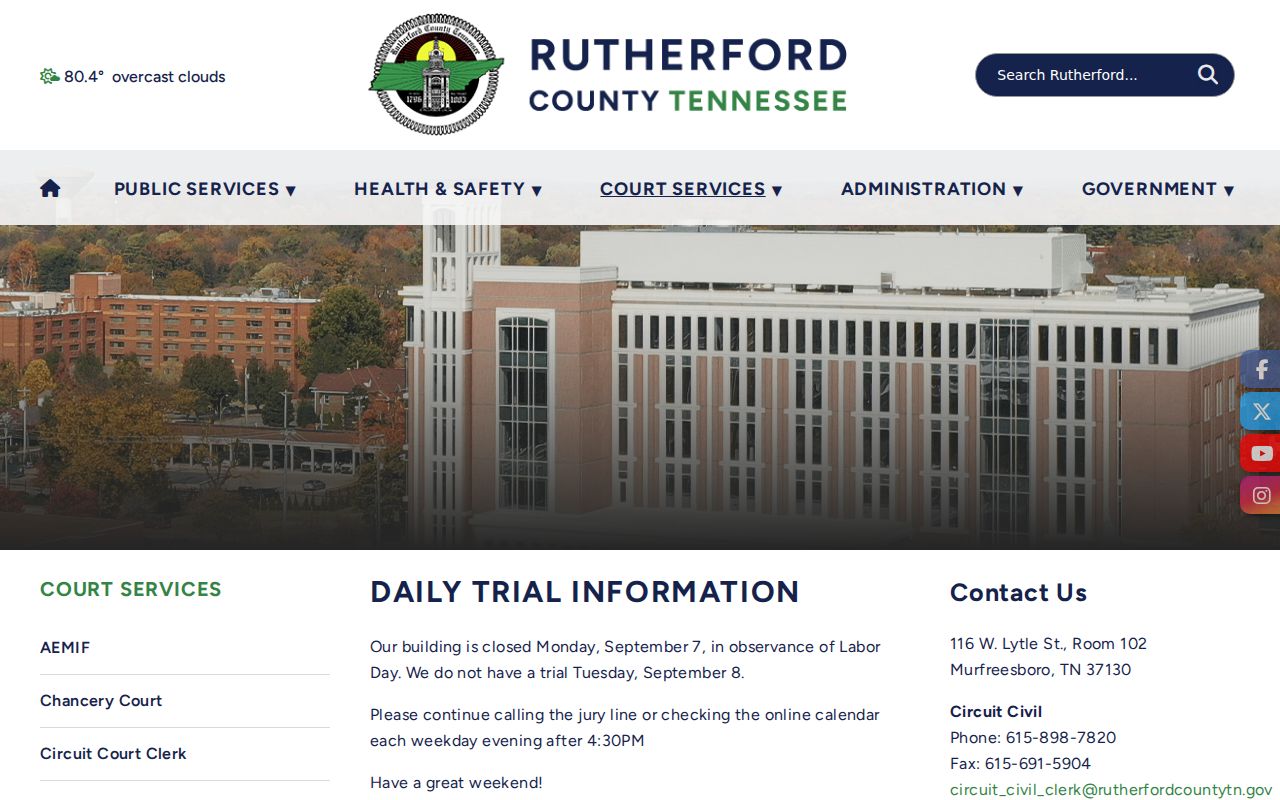
A fresh status check matters because a setting may be reset after an earlier docket was published.
Sealed Dockets and Public Access
Tennessee Supreme Court Rule 34 provides public access to court records unless a statute, rule, or court order makes material confidential. Sealed, expunged, and juvenile matters may be absent or restricted. An empty result is not proof that no case ever existed.
Key rule: Tennessee Supreme Court Rule 34 defines the public-access baseline and recognizes express confidentiality limits.
Requests for restricted material must go to the court with authority over that record.
Rutherford Criminal Record Follow-Up
A portal or calendar match should lead to a precise clerk inquiry. Give the full case number, caption, court office, hearing date, and the exact record wanted. A useful request might name an indictment, motion, entered order, judgment, sentencing document, or later disposition entry. Asking for “everything” can slow the search and may produce a fee estimate for material that does not answer the question. Inspection, a plain copy, and a certified copy are different services. Certification adds the clerk’s authentication; it is not supplied by printing the free online index.
The Circuit Clerk’s criminal counter is at the Judicial Building, 116 West Lytle Street in Murfreesboro. A caller should use 615-898-7812 for Circuit Criminal or 615-898-7831 for General Sessions Criminal. Mail and in-person access remain useful when the portal is blocked by Turnstile, a result is unclear, or the needed document image is not online. Tennessee public-record procedures can support a request for an identified existing record, but court confidentiality rules still control sealed, expunged, juvenile, and protected material.
Payment information is separate from the docket. The official court-selection payment page routes users by court.
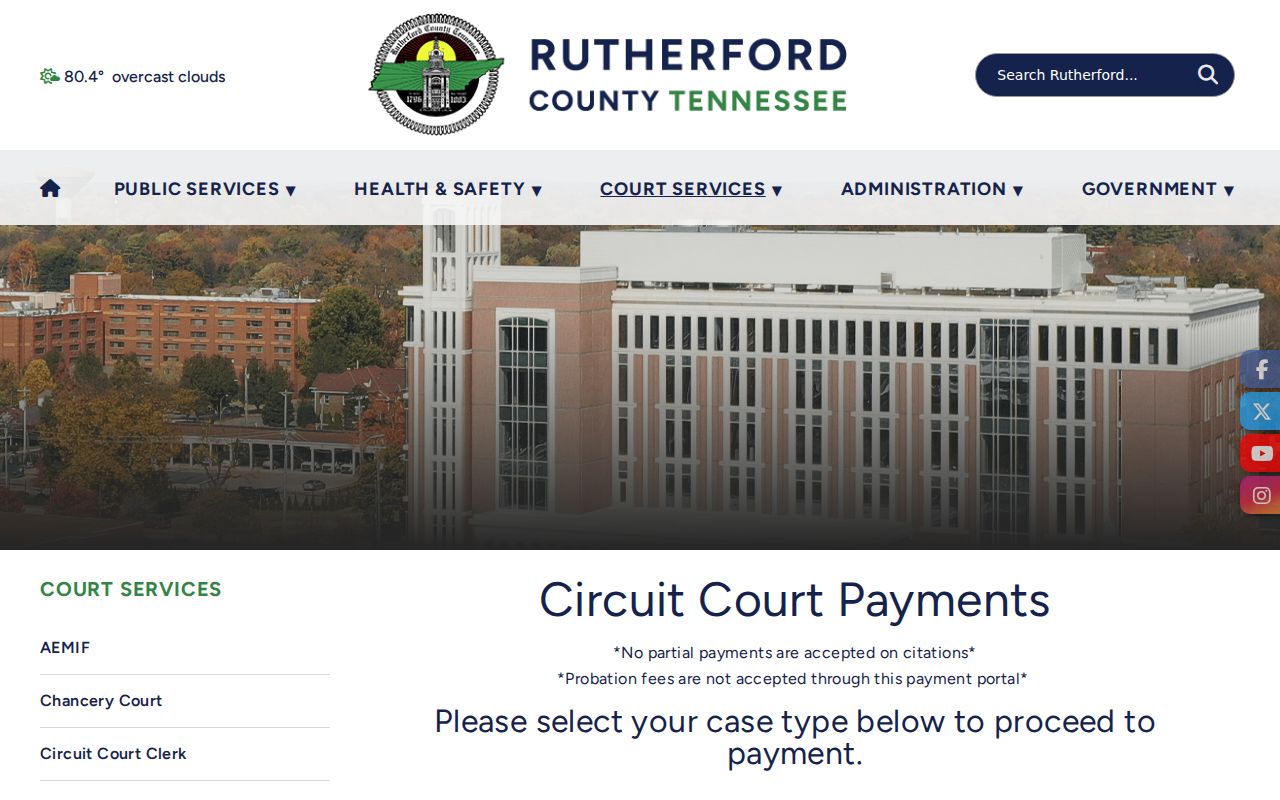
The capture helps prevent payment in the wrong division, but a payment screen does not prove the current charge, balance, plea, or disposition. Confirm those facts in the originating court’s record. A Rutherford County criminal docket search is strongest when the public index, the dated calendar, and the clerk’s official register all point to the same case and event.
Rutherford Docket Versus File
A criminal calendar answers when and where an event is set. The register supplies the sequence of entries. The underlying file holds the available motions, orders, judgments, and other documents. Those layers can update at different times. A hearing label should never be converted into a plea or disposition without the official entry. Copy the label exactly, record the access date, and ask the clerk for the document that resolves the question.
This distinction also applies to specialty-court settings. DUI Court, Mental Health Court, Recovery Court, Veteran’s Court, and re-entry programs connect to criminal or probation matters but do not form a complete public roster. Search the underlying criminal case and respect restrictions on treatment, assessment, and participant information.